
What Is cGVHD?
What is GVHD?
After an allogeneic stem cell transplant, you receive blood-forming stem cells from a donor. These cells move into your bone marrow and start making new blood cells, including immune cells (your infection-fighting white blood cells).1,2
In graft-versus-host disease (GVHD), the graft is your donor’s immune cells, and the host is your body. The donor immune cells see your body as “not me” and can start attacking healthy tissues, causing inflammation (swelling, redness, irritation) in different organs.1
What is cGVHD?
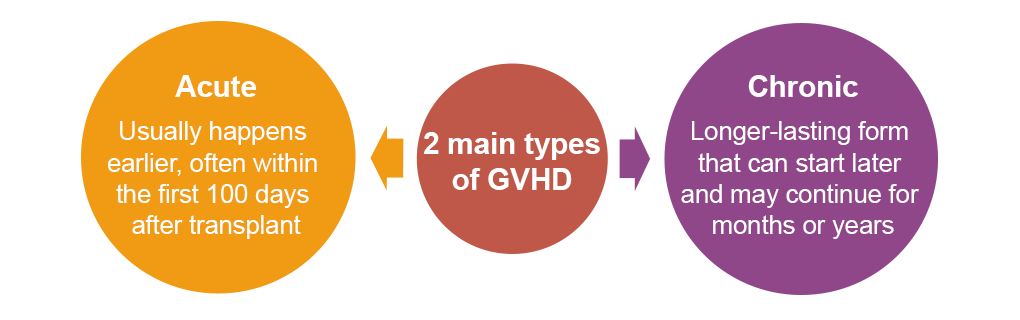
Chronic GVHD (cGVHD) is a long-term complication of an allogeneic transplant. It usually begins within the first 2 years after transplant but can appear earlier or later.1
In cGVHD, the new immune system remains “overactive” and continues to attack parts of the body, leading to ongoing inflammation. This inflammation can cause symptoms such as dryness, tightness, pain, and stiffness in the skin and joints, and it can also affect organs including the mouth, eyes, lungs, liver, digestive tract, and genitals. Over time, repeated inflammation may result in scarring and thickening of tissues, known as fibrosis, which can limit movement, flexibility, or lung function.1
Not everyone who has a transplant will develop cGVHD. Some people have only mild symptoms, while others have more serious problems that affect daily life.
Understanding chronic inflammation after transplant
Chronic GVHD doesn’t happen all at once. It develops in overlapping “phases” in your body.
Think of it in 3 steps3:
- Early irritation and tissue injury
Before transplant, you receive treatments such as chemotherapy and/or radiation to prepare your body. These treatments, and sometimes earlier acute GVHD, can injure the lining of your skin, gut, lungs, and other organs. The damaged tissues release “danger signals” that call in immune cells and chemical messengers that cause inflammation.You may not feel all this happening, but it primes your body for cGVHD later. - A confused immune system
Your new immune system is still learning what belongs and what doesn’t. In cGVHD, parts of the immune system that normally calm down inflammation don’t work as well, and other immune cells that drive inflammation and produce antibodies become overactive. As a result, your new immune system may overreact to your own tissues, treating them like an infection that needs to be attacked. This ongoing confusion keeps the inflammation going instead of letting it settle down.
- Scarring and stiffness (fibrosis)If inflammation keeps going for a long time:
- The body tries to repair the damage but sometimes repairs too much, laying down extra scar tissue
- This can lead to thickened, tight, or shiny skin, stiff joints or tendons, and narrowing in small airways in the lungs, which can cause shortness of breath
You can think of it like a cut that heals with a thick scar instead of smooth skin. In cGVHD, similar scarring can happen inside the body.
What are the symptoms of cGVHD?
Chronic GVHD can affect many different parts of the body but most commonly affects your skin, liver, gastrointestinal tract, and lungs. Symptoms can be mild, moderate, or severe, and they can change over time.2,4
You may have only a few of these symptoms, or several at once.2,4
Skin and hair
People with cGVHD may develop a rash, redness, or itching of the skin. The skin can feel tight, thick, or swollen, and changes in skin color may occur, with lighter or darker spots appearing. Hair loss on the head or body is also common.
Mouth and digestive system
Chronic GVHD can cause dryness in the mouth and make it hard to swallow dry foods. Painful mouth sores, sensitive areas, gum problems, and tooth decay may develop over time. Some people experience nausea, vomiting, diarrhea, stomach pain, or cramping. Poor appetite and unintended weight loss can also occur.
Eyes
Eye involvement may lead to a dry, burning, or gritty feeling in the eyes. Some people notice increased sensitivity to light as well as blurry or changing vision.
Liver
If the liver is affected, people may develop yellowing of the skin or eyes (jaundice) and itching. In many cases, liver involvement is first seen on blood test results that your care team follow closely, even before symptoms are noticeable.
Lungs
Lung symptoms may include shortness of breath, especially with physical activity, a dry and persistent cough, and the sensation of not being able to take a full, deep breath.
Muscles, joints, and fascia (the tissues that connect muscles and bones)
Chronic GVHD can cause muscle weakness, cramping, or pain, along with stiffness in the shoulders, wrists, fingers, or ankles. Some people have difficulty fully straightening or bending their joints and may struggle with everyday movements such as reaching overhead, walking long distances, or completing routine tasks.
Genitals
In women, genital involvement may cause vaginal dryness, itching, burning, or pain with intercourse. In men, symptoms can include itching or soreness of the penis or scrotum and pain with intercourse.
Whole-body symptoms
Whole-body effects of cGVHD may include ongoing fatigue, a reduced ability to exercise or do usual daily activities, and changes in mood, sleep, and overall quality of life.
If you notice new or worsening symptoms, it’s important to tell your transplant team promptly. Early treatment can sometimes prevent symptoms from becoming more severe.
How do doctors describe the grades and severity of cGVHD?
Doctors use a standard scoring system to understand how serious cGVHD is, plan treatment, and track changes over time.5
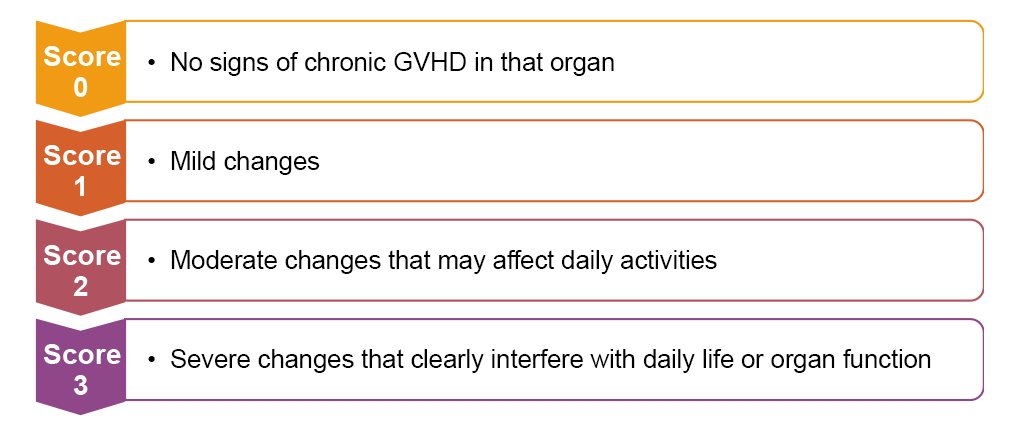
Organ scores (0 to 3)5
For each area of the body (skin, mouth, eyes, gut, liver, lungs, joints/fascia, and female genital tract):
Your team also looks at your overall performance status, meaning how well you can do everyday tasks such as dressing, bathing, cooking, walking, and working.
Overall severity: Mild, moderate, or severe
Based on all these scores together, cGVHD is grouped into6,7:
- Mild cGVHD: Only a few organs are involved
- Symptoms are bothersome but do not significantly limit daily activities
- Moderate cGVHD: More organs are involved, or some organs have more troublesome symptoms
- You may need regular treatment and adjustments to manage symptoms
- Severe cGVHD: Symptoms seriously affect your quality of life or how your organs work
- You may need stronger or combination treatments and close monitoring
These stages help your care team choose the right treatments, monitor whether treatments are working, and plan physical therapy, eye care, dental care, and other supportive services.
Your stage can change over time. With treatment, some people move from severe or moderate to milder disease or even into remission (in which symptoms are much improved or gone).
Who is at higher risk for cGVHD?
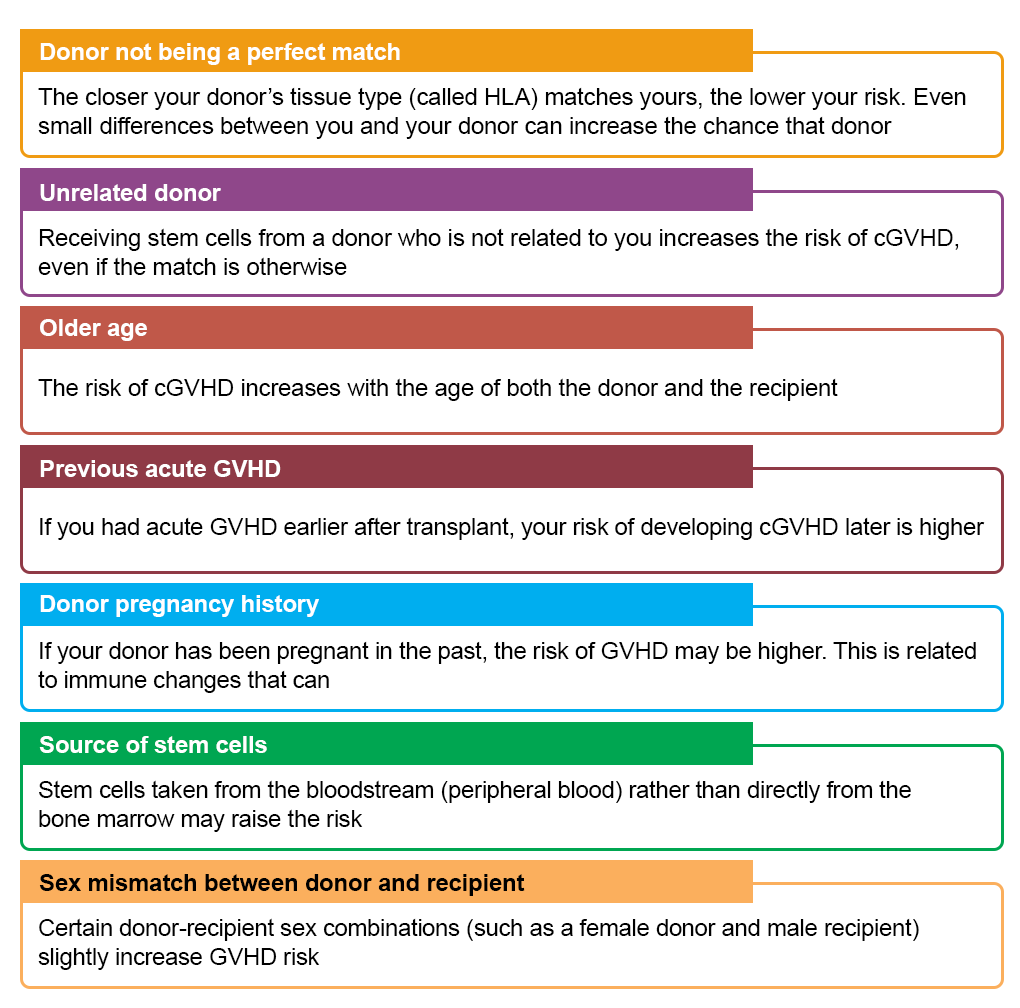
A risk factor is anything that increases your chances of developing a condition. Some people have several risk factors for cGVHD and never develop it, while others may have few risk factors and still be affected. Your transplant team considers all these factors when monitoring you after transplant.2
Key risk factors for cGVHD include2,4:
Your transplant team carefully balances these risks when choosing a donor and planning your treatment. Even if you have 1 or more risk factors, close follow-up and early care can make a big difference in managing symptoms and protecting your long-term health.
What does this mean for me?
Living with cGVHD can be challenging, but understanding what is happening in your body can help you2:
Recognize symptoms early

Communicate clearly with your healthcare team

Take part in decisions about your care

Ask for support with physical, emotional, and sexual health
If you are noticing new tightness, dryness, pain, shortness of breath, or any other change that worries you, do not hesitate to reach out to your transplant team. Chronic GVHD is treatable, and earlier attention often leads to better outcomes.
References
- Justiz Vaillant AA, Modi P, Mohammadi O. Graft-versus-host disease. StatPearls, 2025. http://www.ncbi.nlm.nih.gov/books/NBK538235/. Accessed 12/14/2025.
- National Comprehensive Cancer Network (NCCN). Graft-versus-host disease. 2025. https://www.nccn.org/guidelines/guidelines-detail?category=patients&id=63. Accessed 12/14/2025.
- Flavin B. Chronic graft-vs-host disease: current understanding of disease and treatment landscape. J Manag Care Spec Pharm. 2022:S2-S12. https://www.doi.org/10.18553/jmcp.2022.28.12-b.s1
- Cleveland Clinic. Graft vs host disease (GvHD). 2/21/2023. https://my.clevelandclinic.org/health/diseases/10255-graft-vs-host-disease-an-overview-in-bone-marrow-transplant. Accessed 12.14.2025.
- Filipovich AH, Weisdorf D, Pavletic S, et al. National Institutes of Health Consensus Development Project on criteria for clinical trials in chronic graft-versus-host disease: I. Diagnosis and Staging Working Group Report. Biol Blood Marrow Transplant. 2005;11(12):945-956. https://doi.org/10.1016/j.bbmt.2005.09.004
- Vadakkel G, Eng S, Proli A, Ponce DM. Updates in chronic graft-versus-host disease: novel treatments and best practices in the current era. Bone Marrow Transplant. 2024;59(10): 1360-1368. https://doi.org/10.1038/s41409-024-02370-8
- Flowers MED, Martin PJ. How we treat chronic graft-versus-host disease. Blood. 2015; 125(4):606-615. https://doi.org/10.1182/blood-2014-08-551994