
Making the Diagnosis
Because cGVHD can affect many different organs and cause a wide range of symptoms, diagnosing it often requires several steps and more than 1 type of test. There is no single test that confirms cGVHD on its own. Instead, your healthcare team looks at your symptoms, physical exam findings, blood work, imaging studies, and sometimes tissue biopsies to make an accurate diagnosis.1
The goal of testing is not only to confirm cGVHD, but also to identify which organs are affected and how severe the disease may be. This information helps your care team choose the best treatment and monitor how well it is working over time.1
How cGVHD is evaluated
Doctors diagnose cGVHD using a combination of clinical evaluation and testing. Most patients will not need every test. Instead, your provider will recommend specific tests based on your symptoms and exam findings.1
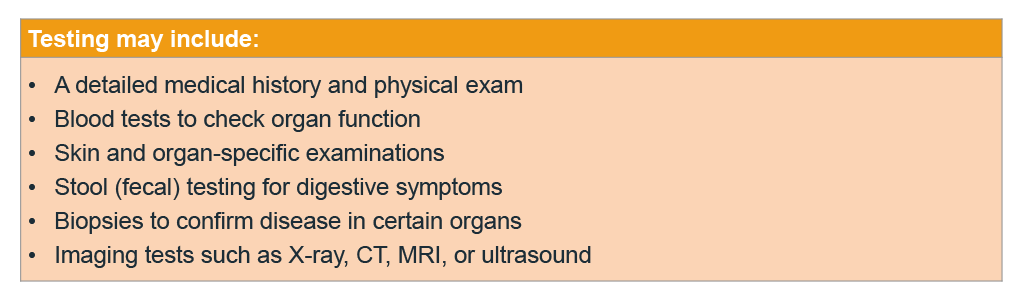
Physical exam and medical history
A physical exam is 1 of the most important parts of diagnosing cGVHD. During the exam, your provider will check your vital signs and carefully examine your skin, mouth, eyes, joints, and other areas where cGVHD commonly appears. They may feel for swelling, tenderness, or enlarged lymph nodes.1
Your medical history is just as important. You will be asked about your transplant, current medications, and when your symptoms started. Be sure to share any changes you’ve noticed even if they seem mild, such as fatigue, rashes, dry eyes or mouth, joint stiffness, breathing changes, diarrhea, or abdominal pain.1
Blood tests
Blood tests help your care team understand how well your body is functioning and whether cGVHD may be affecting certain organs. Blood is usually drawn from a vein in your arm and sent to a laboratory for analysis.1
Common blood tests include a complete blood count (CBC), which measures red blood cells, white blood cells, and platelets. Low blood counts are common in people with cGVHD and can increase the risk of infection, fatigue, or bleeding.1
- A basic metabolic panel checks kidney function and electrolyte levels; these may change due to cGVHD, dehydration from diarrhea, or medication side effects1
- Liver function tests show how well your liver is working—if the liver is affected by cGVHD, these levels may be higher than normal; 1 key marker is bilirubin in that high bilirubin can cause yellowing of the skin or eyes (jaundice), itching, and dark-colored urine1
- A hepatitis panel may also be performed to check for current or past hepatitis infection, since some cGVHD treatments can reactivate hepatitis viruses1
Skin examination
The skin is 1 of the most commonly affected organs in cGVHD, so a careful head-to-toe skin exam is essential. Your provider or a dermatologist will look for changes in color, texture, and thickness of the skin, as well as any sores or rashes.1
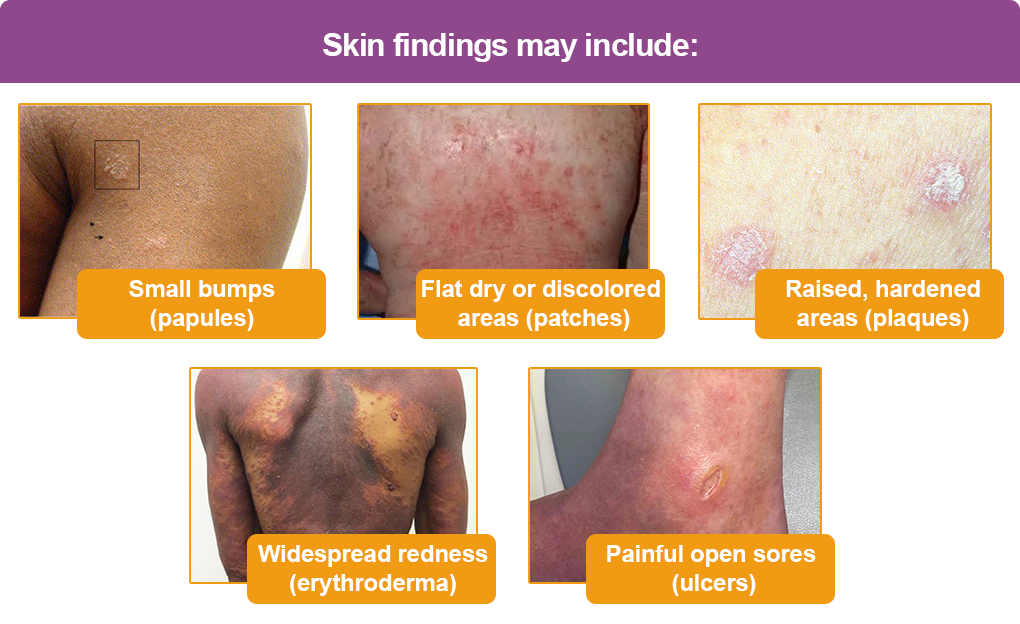
Image references:
Hymes SR, et al. Biol Blood Marrow Transplant. 2005;12(11):1101-1113. https://www.sciencedirect.com/science/article/pii/S1083879106006045
Climan A. What does a GVHD rash look like? Photos and symptoms. 3/12/2025. https://www.mygvhdteam.com/resources/what-does-a-gvhd-rash-look-like-photos-and-symptoms
National Comprehensive Cancer Network (NCCN). Graft-versus-host disease. 2025. https://www.nccn.org/patients/guidelines/content/PDF/GVDH-patient-guideline.pdf
Shi C, et al. Transplant Cell Ther. 2024;30(9):S513-S533.
https://www.astctjournal.org/article/S2666-6367%2824%2900432-9/fulltext
Your care team may recommend taking photos over time to track changes and response to treatment.
Fecal (stool) analysis
If you have diarrhea, abdominal pain, or other digestive symptoms, your doctor may request a stool sample. This test helps determine whether cGVHD is affecting your intestines and also checks for infections that can cause similar symptoms.1
You will collect the sample at home using a provided container, following clear instructions. Because infections can closely mimic gastrointestinal cGVHD, this test is a key part of the diagnostic process.1
Biopsies to confirm cGVHD
In some cases, a biopsy is needed to confirm the diagnosis. A biopsy involves removing a small sample of tissue and examining it under a microscope.1
Depending on your symptoms, your doctor may recommend:
A skin biopsy for rashes or skin tightening
A gastrointestinal biopsy during an endoscopy or colonoscopy if bowel symptoms are present
A liver biopsy if blood tests suggest liver involvement and the diagnosis is unclear
Biopsies can provide strong confirmation of cGVHD and help guide treatment choices. Most biopsy procedures are done with numbing medicine and, when needed, sedation to keep you comfortable.1
Imaging tests
Imaging tests take pictures of the inside of your body to look for signs of organ involvement. A radiologist reviews the images and shares the results with your care team.1
Imaging may include:
X-ray
to look at the lungs for infection or inflammation

CT scan
to view detailed images of organs such as the liver or intestines

MRI
for high-resolution images without radiation

Ultrasound
to examine organs and help guide biopsies
Performance status
Your care team may also assess your performance status, which measures how well you can perform daily activities such as walking, bathing, cooking, and working. This helps your providers understand how much cGVHD is affecting your everyday life and what level of treatment your body may be able to tolerate.1
What happens after diagnosis
Once cGVHD is confirmed and the affected organs are identified, your healthcare team will create a personalized treatment plan. This plan is based on disease severity, organ involvement, your overall health, and your treatment goals. Ongoing monitoring with repeat exams and testing is common to track how well treatment is working and to adjust care as needed.1
Reference
- National Comprehensive Cancer Network (NCCN). Graft-versus-host disease. https://www.nccn.org/guidelines/guidelines-detail?category=patients&id=63. Accessed 12/14/2025.