
Inflammation & the Body
Chronic graft-versus-host disease (cGVHD) can affect many different organs in the body. Because your new immune system may stay turned on longer than it should, this can lead to ongoing inflammation (irritation and swelling in tissues). If inflammation continues over time, it can sometimes cause fibrosis, which is the medical word for scarring.1,2
Fibrosis can make tissues tighter, harder, or less flexible—much like a scar on your skin after a wound heals. When this happens inside the body, it can affect how well organs work.
Not everyone develops fibrosis, and not every organ is affected. But understanding where cGVHD can show up, and what it looks like, can help you catch symptoms early and protect your long-term health.
What is inflammation?
Inflammation is your immune system’s natural way of responding to injury or danger. In cGVHD, the new donor immune cells mistakenly treat your body’s tissues as “foreign,” causing irritation.1,2
You may notice redness or rashes, swelling or tightness, pain or discomfort, dryness or sensitivity, or trouble moving certain body parts.
When inflammation lasts for months or years, it may lead to fibrosis (scarring).
What is fibrosis?
Fibrosis happens when the body tries to repair inflammation but does so in an overactive way, laying down too much scar tissue.1-3
Fibrosis can cause:

Skin tightening
(skin may feel shiny or hard)
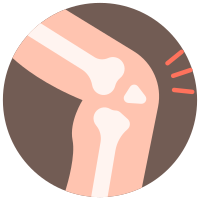
Joint stiffness or limited movement
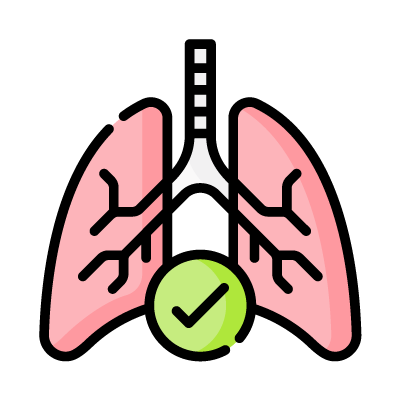
Reduced lung flexibility
(making it harder to breathe deeply)
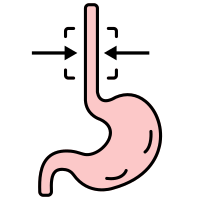
Narrowing of the esophagus
(trouble swallowing)
How cGVHD can affect different organs
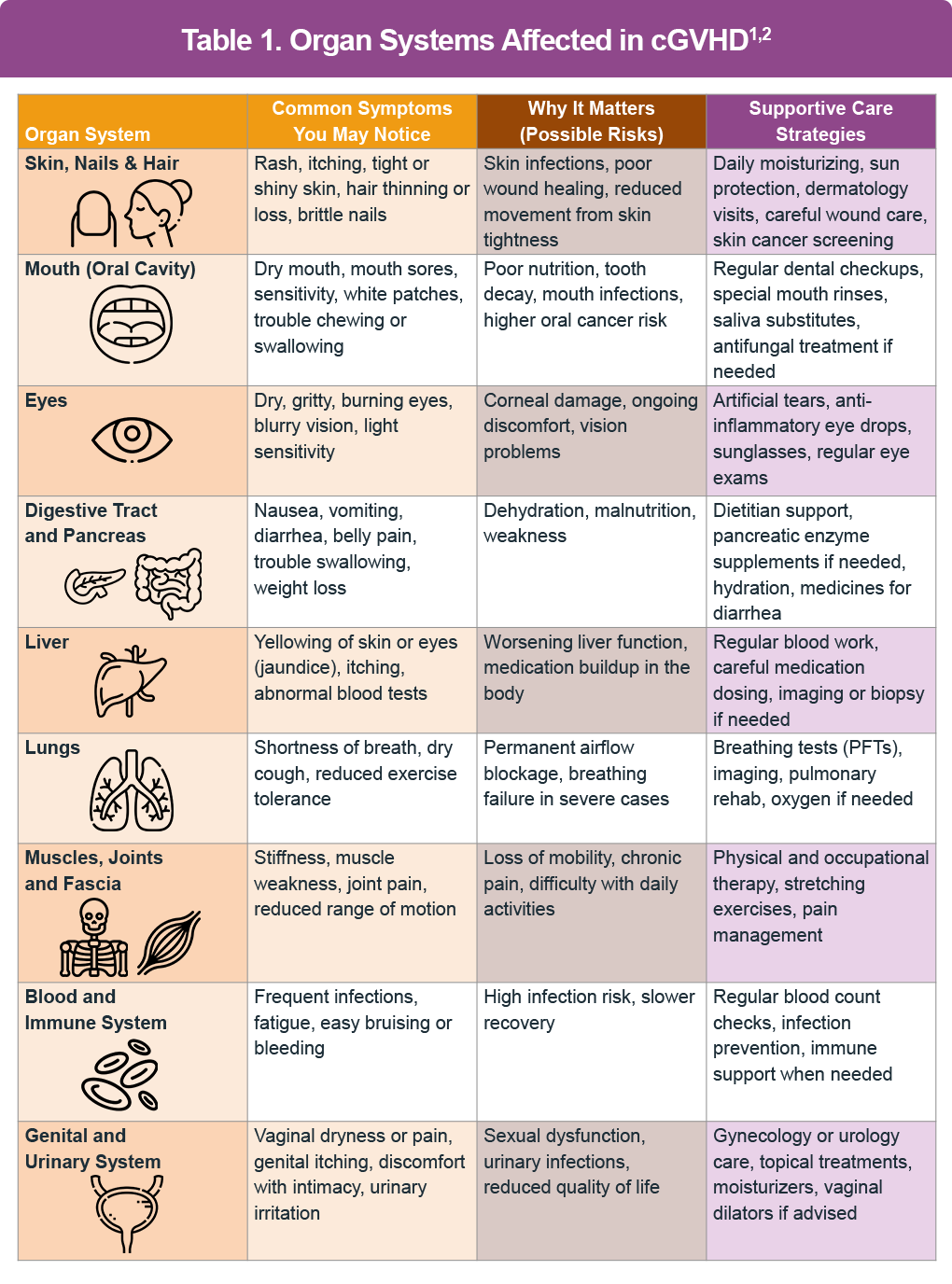
Chronic GVHD can affect many parts of the body. Table 1 shows which organs may be involved, common symptoms to watch for, possible health risks, and typical supportive care.1,2
What this means for you
Organ involvement in cGVHD can directly affect your energy and mobility, your ability to maintain good nutrition and hydration, your breathing and vision, your risk of infection, and your overall quality of life. To help protect your health, it is important to report new or worsening symptoms early, keep regular follow-up appointments, follow your supportive care plans, and ask for specialty referrals when needed. With early attention and a whole-team approach, many people with cGVHD are able to manage symptoms effectively and protect their long-term health.1,2
References
- Filipovich AH, Weisdorf D, Pavletic S, et al. National Institutes of Health Consensus Development Project on criteria for clinical trials in chronic graft-versus-host disease: I. Diagnosis and Staging Working Group Report. Biol Blood Marrow Transplant. 2005;11(12):945-956. https://doi.org/10.1016/j.bbmt.2005.09.004
- National Comprehensive Cancer Network (NCCN). Hematopoietic cell transplantation. Version 2.2025. https://www.nccn.org/guidelines/guidelines-detail?category=patients&id=63 Accessed 12/14/2025.
- Antar SA, Ashour NA, Marawan ME, Al-Karmalawy AA. Fibrosis: types, effects, markers, mechanisms for disease progression, and its relation with oxidative stress, immunity, and inflammation. Int J Mol Sci. 2023;24(4):4004. https://doi.org/10.3390/ijms24044004