Chronic graft-versus-host disease (cGVHD) is a long-term condition that can affect many organs and change over time. Because treatment often involves ongoing immune suppression, continuing care must carefully balance infection prevention, organ-specific monitoring, and coordinated support from a multidisciplinary care (MDC) team. Regular follow-up allows your care team to detect new problems early, adjust treatment as needed, and support your long-term health and quality of life.1
Your multidisciplinary care team
Your transplant team remains the central point of contact throughout your care and coordinates communication across all specialists. Managing cGVHD requires a team approach because different organs may be affected at different times. Core members of your team typically include your transplant physician and advanced practice provider, a transplant nurse or nurse navigator, a pharmacist to manage complex medications, a social worker or mental health professional for emotional support, a dietitian, and physical or occupational therapists.2,3
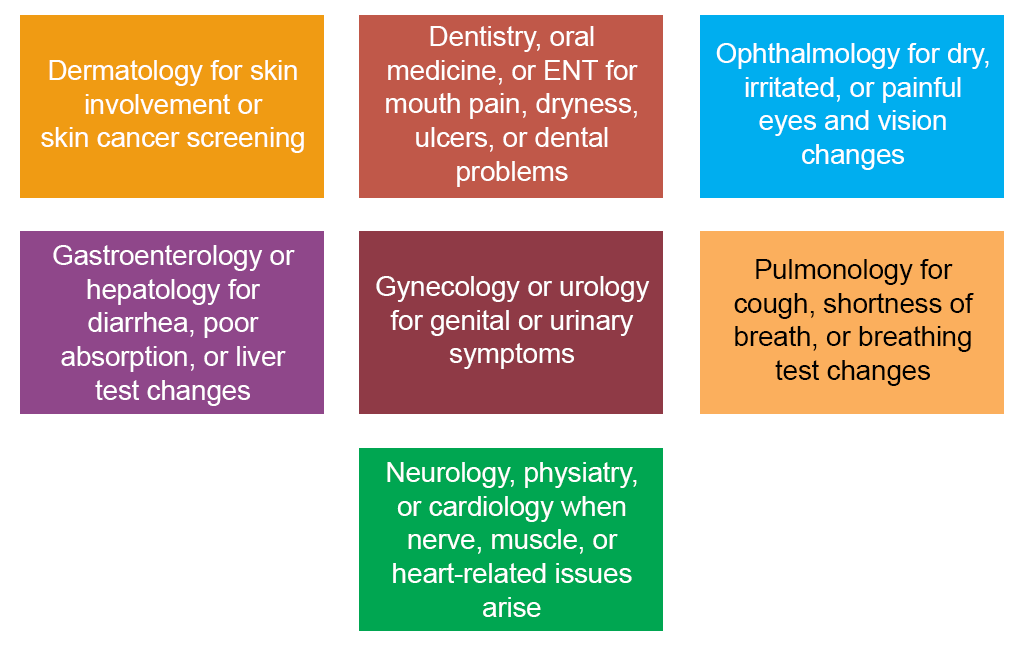
Based on your symptoms, you may also be referred to specialists such as2,3:
Ongoing communication between these specialists and your transplant center is essential so that medication changes, infection risks, and immune suppression levels are visible to everyone involved in your care.
Infection prevention and vaccination
Infection remains 1 of the most serious risks for people living with cGVHD, particularly when immune-suppressing medications are intensified. Preventing infections and detecting them early are a major focus at every visit. Preventive antibiotics, antiviral, and antifungal medicines are used when systemic immune suppression is started or increased, following established cancer-related infection guidelines. Regular monitoring for cytomegalovirus (CMV) reactivation is also important, as CMV can cause serious complications after transplant if not treated early.1
Vaccination is another key part of prevention. Live vaccines are avoided in patients with active GVHD or those taking significant immune-suppressing medicines. Inactivated vaccines—including coronavirus disease 2019 (COVID-19) and routine childhood or adult vaccines—are given based on posttransplant schedules, though immune responses may be weaker early after transplant and may require booster doses.1
Routine preventive IVIG is not recommended for most patients with cGVHD. However, it may be considered in selected situations, such as for certain umbilical cord blood transplant recipients, children with immune deficiencies, or patients who continue to experience repeated sinus and lung infections despite standard prevention strategies.1
Monitoring and reducing steroid-related risks
Because many patients receive steroids for extended periods, ongoing monitoring for steroid-related side effects is built into long-term care. High-dose or prolonged steroid use increases the risk of infections, high blood sugar, muscle weakness, mood and sleep changes, and bone loss. Patients are typically advised to take vitamin D and calcium, and many will undergo bone density (dual-energy X-ray absorptiometry [DEXA]) scans to screen for osteoporosis. Providers also routinely watch for muscle weakness, weight changes, and emotional or sleep disturbances, with referral to specialists such as endocrinology or bone health clinics when needed.1
Patient support and ongoing self-monitoring
Patients and caregivers play a critical role in continuing cGVHD care. Because symptoms can change quickly, patients are encouraged to keep track of warning signs such as fever, cough, diarrhea, new pain, mouth sores, or vision changes. Telehealth visits can help maintain close contact for those who live far from their transplant center, but regular in-person exams remain essential. Reporting new or worsening symptoms early allows your care team to intervene before complications become severe.4
Continued monitoring based on affected organs
Ongoing monitoring is tailored to the organs involved and the severity of the disease. Visits are usually more frequent early after transplant and during active cGVHD, then gradually spaced out as immune suppression is reduced.1,4
A long-term, coordinated approach
Continuing care for cGVHD is a long-term partnership between you, your caregivers, and a coordinated medical team. With structured monitoring, strong infection prevention, timely referrals, and supportive therapies, many people with cGVHD are able to manage symptoms, protect organ function, and maintain meaningful quality of life over time.4